Why self-assessment is not enough on its own
Self-image shows you from the inside, while feedback from family, friends and colleagues shows the same person from the outside – together they give the full picture. Here is how differences become a conversation starter.
In this article
The same person, from two vantage points
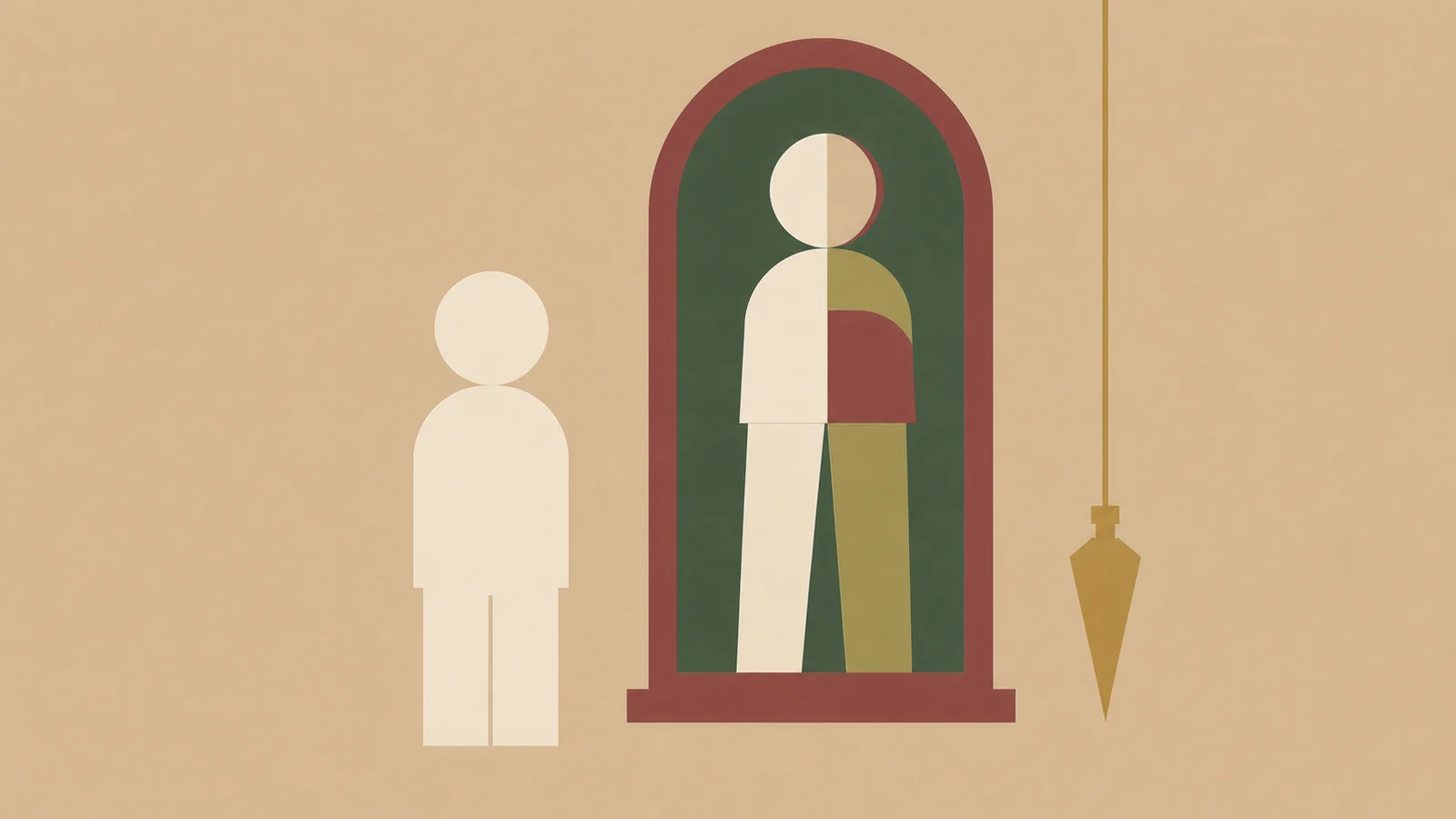
We know things about ourselves that nobody else does: we know our intentions, our doubts, and the background to our situations. The people around us, in turn, see what comes through of all this in our shared interactions. Both pictures are real – they are simply taken from a different angle.
This is the duality the Johari window describes: there is what we know about ourselves and others see too, what we keep to ourselves, and what is only visible from the outside. Comparing the two perspectives is exactly what makes those open and hidden areas visible.
Self-report and the feedback of the people around us do not compete. They show the same person from two vantage points, and together they give a fuller picture.
According to Connelly and Ones's 2010 meta-analysis, for several traits the ratings of people who know us well track actual behaviour at least as closely as self-report does. Anyone building on self-assessment alone leaves out an important perspective.
Difference is the most valuable signal
When the two pictures line up, that is confirmation: what someone believes about themselves is what others experience. The most useful conversations, however, start where the two pictures differ. Three typical patterns:
Hidden strength. The people around someone rate their calm or reliability higher than they rate it themselves. Take the cases where someone feels they are „just doing their job, like everyone else” – while everyone turns to them whenever something breaks. Said out loud and made visible, it becomes something to build on deliberately; left unsaid, it may stay unnoticed.
Blind spot. Someone may experience themselves as always quick to respond – while others often wait days to hear back. Neither of them is necessarily wrong: one knows their intention, the others know what actually happens as a result. It is exactly these small differences that show what is worth talking about.
Different situations. Someone who only meets you in meetings sees something different from someone who also knows how you work when you are deep in a task alone. The two pictures can differ while both are accurate – they simply describe different situations, which is why it is worth looking at who is seeing this from where.
Why can the two pictures differ?
Differences have everyday causes, even without any bias:
- We see different situations. We know ourselves across many contexts, the other person mainly from the shared ones.
- Not everything is visible from outside. The social signals of X Extraversion are easy to observe; private deliberation or anxiety much less so.
- How well someone knows you matters. In the 2024 study by Lee, de Vries and Ashton, covering 5,405 people, self-image and outside feedback tended to agree more closely in closer relationships.
- Measurement always carries uncertainty. How the questions are read, and what is going on in someone's life, both shape the answers.
- The ideal self can play a part too. Sometimes we partly mark the person we would like to be.
Three questions for your next conversation
A difference does not necessarily mean that someone is wrong. It is far more often a sign that there is something here worth talking about.
If you see a larger difference in the comparison, these three questions almost always help uncover the reason:
- „In which situations do we see each other?” The picture may cover only a few recurring situations, while most of life happens elsewhere.
- „What exactly do we expect from each other?” On questions of speed versus thoroughness, or independence versus consultation, differing expectations often show up as differing ratings.
- „Is there a side of you you feel we don't see?” This is where hidden strengths tend to surface.
How trita shows it
In trita, self-assessment is joined by feedback from the people the participant invites – colleagues, friends, family. The comparison view presents the two pictures side by side in detail, along the facets. No single response is ever shown on its own: the comparison only opens once a third answer has arrived, in aggregate.
The system does not decide who is right – it shows where it is worth looking closer. If a difference touches on a sensitive topic, we recommend a facilitated conversation for interpretation.
Who should you invite?
The people you invite decide what you get to see. Three to five is usually enough. Include someone who sees your everyday life, and someone who only meets you in a few recurring situations.
Don't invite only the people you get along with easily. The most informative feedback often comes from someone you occasionally find harder to be around. An old and a new acquaintance give different pictures – and that difference is itself information.
Sources and limitations
If you see the odd difference here and there, that on its own proves nothing: neither that you see yourself in a distorted way, nor that you have changed. Large-sample research found no pattern of us generally seeing ourselves as better or worse than we are. Which way the two pictures diverge varies from person to person and from relationship to relationship. And smaller differences often move within the natural spread of the measurement itself. It is concrete situations that give a difference its meaning – on its own, it is not worth labelling anyone with.
- Kim et al. (2019): meta-analysis of mean self-observer differences
- Connelly and Ones (2010): observer-rating accuracy and incremental validity
- Lee, de Vries and Ashton (2024): self-observer agreement across relationships
- Official HEXACO scale descriptions
A note on the references: the paper by Kim et al. appeared online in late 2018 and in a journal issue in 2019. If you cite it with an exact year, check which form you mean.
Read next
See what your results look like.
In ~10 minutes, get a useful picture of what you bring to a team – for free.
Értesítő
Új cikkek és válogatott összefoglalók
Szólunk, ha új cikk jelenik meg, és időnként hírlevelet is küldünk válogatott olvasnivalókkal. Bármikor leiratkozhatsz.